The Game I Kept Looking For
The Game I Kept Looking For
Introducing Straylight Orbital, and what I'm building first.
There's a kind of indoor session I've spent years looking for a good game for.
Not the structured workout. The intervals on the calendar, the VO2 max set, the three-by-ten at threshold. TrainerRoad does that well, and I use it. When I'm in a training block, opening that app and doing the work the coach designed is its own discipline. The graph lights up, the watts are where the watts are supposed to be, and an hour later I'm tired in the specific way I intended to be tired.
Not the serious race simulation either. Zwift and MyWhoosh do that well, and they're right there if you want what they offer. Real race formats, real peloton dynamics, real power-to-weight rankings. If you're ready to race, if that's the scratch you want itched, these are excellent products.
But between those — and honestly, also around them, for all the hours that aren't a workout or a race — there's a kind of session I've never quite seen addressed.
The session when I don't want a homework assignment. When I don't want to get dropped from a Cat 3 ride thirty seconds in. When the weather outside is bad and the trainer is the only way I'm moving that day, and I just want to enjoy the hour. I want to put out some watts, spin the pedals, and have a genuinely good time doing it.
That session doesn't really have a good game for it. And after enough years of noticing the gap, I started building one.
The two things cycling games are, and the thing they mostly aren't
If you own a smart trainer and have tried the major indoor cycling apps, you've probably noticed the same pattern I did. The market has two dominant modes, and they're both good at what they do. They're just not games in the way I mean.
The first mode is the spreadsheet. Watch the graph, hit the power target, hold the line. TrainerRoad is the purest expression of this — it's beautifully designed for the purpose, and for the structured training use case it's hard to beat. Zwift workouts land here too. The aesthetic is dashboard, the posture is attention, the satisfaction is a completed protocol.
I love the spreadsheet when I'm training for something. But "watch the graph and hit the number" is, fundamentally, instrumentation. It's a measurement tool with visual flair. It can be rewarding; it's rarely fun in the way a game is fun.
The second mode is the simulation. Ride a virtual version of a real place. Recreate the dynamics of a real bike race. Drafting, gradients, peloton pacing, the whole texture of outdoor cycling rendered in a virtual world. Zwift's group rides and races, MyWhoosh's event formats, Rouvy's real-world route overlays.
The simulation is an incredible technical achievement and for the right rider it's genuinely wonderful. But the honest truth is that the simulation works best for people who already love the real thing it's simulating. A Cat 2 racer gets dropped into a group ride and has a great time. A returning rider rebuilding fitness after a long break gets dropped in, watches the pack ride away in the first ninety seconds, and quietly concludes the app isn't for them.
The simulation is authentic. That's its strength. It also means it imports all the intimidation of the real sport into the digital one. If the real sport already welcomed you, great. If it didn't, the simulation doesn't either.
What I kept looking for was a third thing. Not a dashboard, not a simulation — a game. Something with a world of its own, stakes of its own, rules designed around enjoyment rather than measurement or reproduction. Something where the smart trainer isn't a measurement device or a peloton proxy, but a controller. Something that treats the hour I spend on the trainer the way a good console game treats the hour I spend on the couch: as a thing to be made genuinely enjoyable by design.
That kind of game didn't exist for cycling. So I started building it.
Introducing Straylight Orbital
I'm the founder of Straylight Orbital, an independent game studio. I'm building it solo, from a lifetime of iOS engineering, years of riding bikes, and an increasing conviction that the fitness-adjacent game space has been serving everyone except the specific kind of person I just described.
Our first title is a game played with real physical effort. Cycling first, but the input is power, not a specific sport. Any Bluetooth smart trainer drives the game. So does any BLE-broadcasting rower — the Concept2 RowErg with its PM5 monitor works perfectly. So does a SkiErg. So does a hand-crank ergometer used by adaptive athletes. If the hardware broadcasts wattage over Bluetooth, it plays the game.
The core mechanic is racing. Not the authentic-simulation kind of racing — the game kind. Races against the game now, races against your friends once multiplayer ships. No power-to-weight rankings. No FTP comparisons. No training-load metrics. No leaderboards persisting everyone's comparative worth across time.
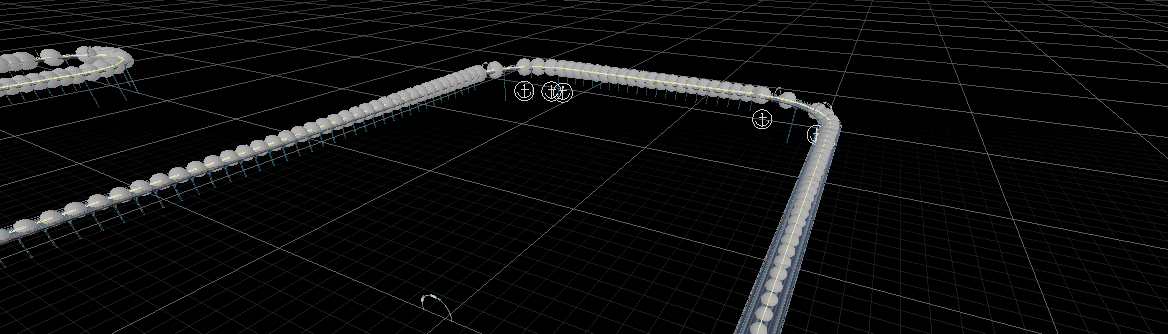
The world is its own built thing. A futuristic setting, designed to feel like a place rather than a stylized course. You're not riding a version of somewhere real. You're playing in a place that only exists inside the game — which is how a game world is supposed to work.
Premium-paid, one time, iOS and Android. No dark patterns, no loot boxes, no gacha, no engagement traps dressed as progression. The game respects your time because games that don't respect your time shouldn't exist.
What this isn't
Worth being clear about what Straylight is not, because the category confusion in this space is real and I don't want to contribute to it.
It isn't a training plan. If you need structured intervals built by a coach to hit a target FTP by a specific date, TrainerRoad does that exceptionally well and I'll be a subscriber long after Straylight ships.
It isn't an FTP improvement program. The game will not tell you you're stronger this week than last week. It will not give you a training score that goes up. It has no opinions about your fitness trajectory whatsoever.
It isn't a fitness tracker. It doesn't write to Apple Health or Strava claiming your play session was a workout. If you want to log a workout, use the tools that exist for logging workouts.
It isn't a race simulation. The racing in Straylight is game racing — designed around fun, not around reproducing the texture of outdoor competition. If you want to recreate drafting in a Cat 1 crit, other products do that.
It isn't a replacement for anything you already love. There are great products in this category and I use several of them. Straylight is designed to sit alongside them, for the hour when you want to play a game, and the equipment you already own happens to be the best controller for it.
Fitness level isn't the axis of progression. Play is.
This is the design commitment underneath everything.
In most fitness-adjacent games, your fitness level determines your experience. Faster riders have a better time than slower ones. More serious athletes unlock more content. The game rewards training outcomes and punishes — implicitly or explicitly — their absence.
Straylight doesn't do that. Not because it can't, but because it shouldn't. The moment fitness level becomes the axis of progression, a huge swath of the people who could enjoy the game are implicitly told they haven't earned the right to.
Someone rebuilding fitness after a long break. A serious athlete on an off day when the last thing they want is another structured session. A casual commuter who bought a trainer during the pandemic and mostly doesn't use it. Someone whose gym bike produces wattage over Bluetooth but who has never seriously trained for anything. A Cat 2 racer in November who just wants to pedal and have fun for an hour. An adaptive athlete whose hand-crank ergometer broadcasts watts and who has been waiting for a game ecosystem that notices they exist.
All of these people should have a great time with Straylight. The game that serves all of them is a game where your fitness level doesn't determine your experience. It's the input device for the experience, not the gatekeeper of it.
What fitness level does do in Straylight is give the game its raw material. Your wattage, whatever it happens to be today, is the controller. The game reads what you're capable of right now, this session, and calibrates the play around that. It doesn't judge the number. It doesn't store it against last week. It doesn't rank you against strangers. It just uses it, in the moment, to make the game fun to play.
That design principle is, I think, the most important thing about Straylight. It's the answer to the question of who the game is for: everyone who owns the equipment. Not everyone who owns the equipment and meets some fitness threshold. Everyone.
One honest note about all of this
I've spent almost this entire post talking about design ethics. Player respect. Premium-paid over dark patterns. Fitness level as input not gatekeeper. Treating people like people and not engagement metrics.
Let me be honest about something: none of that matters if the game isn't actually fun.
I don't want to sound too virtuous here. A respectful game that nobody plays is just an unplayed game. A premium-paid game with beautiful design ethics and a clear commitment to player dignity, but whose core loop is boring, is a failure regardless of how well-intentioned it is.
Craft has to come first. That's the whole bet. Fun is the test every design decision gets measured against. Every mechanic, every progression system, every moment of the game has to answer the question "is this genuinely enjoyable to play?" before it gets to answer any of the other questions.
The ethics aren't the product. They're how I hold myself accountable to the product. The product is a game that's actually fun, for people who want to have fun on their trainers and their rowers and their ergs, for the hour when they don't want to do homework or survive a simulation.
That's the thing I'm building. If I can't build that, none of the rest of this matters.
Why now, why me
A bit of background, for people arriving at this post without knowing who's writing it.
I've spent most of my career as a senior iOS engineer. Caterpillar, Sam's Club Innovation R&D, Adobe, the NFL. Deep Apple ecosystem specialist. Systems thinker. Cyclist of eight years now.
Straylight Orbital is the studio I'm building to ship games that wouldn't exist otherwise. The first one is the game I kept looking for and never quite found. I'm building it as a solo founder, with an AI-integrated development pipeline that makes solo scope more viable in 2026 than it was even a few years ago. I work in Unity. The engineering will be honest; the engineering posts will be too.
I'm also the principal of Strayer Studio, through which I run a fractional CTO practice for small to mid-size businesses across industries. That's the day job. Straylight is the work.
What comes next
The studio exists. The work is underway. The game isn't ready to show yet — the reveal trailer is several months out, and I'm not going to tease details of the world or the mechanics before that. There's a kind of slow trust-building that matters when a solo founder announces a project and then asks people to wait a year for the thing itself. Part of earning that trust is not over-promising in the meantime.
What I will do here, and on the studio's social channels, is share the craft. Development notes. Engineering deep dives. The reasoning behind specific decisions. The occasional time-lapse of track building or world construction. The texture of what it's like to build this kind of game as one person, with the tools available in 2026, for an audience I genuinely want to respect.
If any of this resonates — if you're a cyclist, a rower, an ergometer owner, a fellow indie developer, a person who cares about craft, or just someone who wants to see whether I can actually pull this off — I'd love for you to follow along.
My personal feed is where I'll write about the process most informally.
The next year is going to be interesting. Thanks for being here for the start of it.
—Mark Founder, Straylight Orbital
This post originally appeared on LinkedIn in shorter form. The expanded version lives here.